
Compressed air monitoring
For operations and maintenance teams relying on compressed air. Follow pressure and compressor runtime through production and idle hours, then use the readings to guide leak detection.
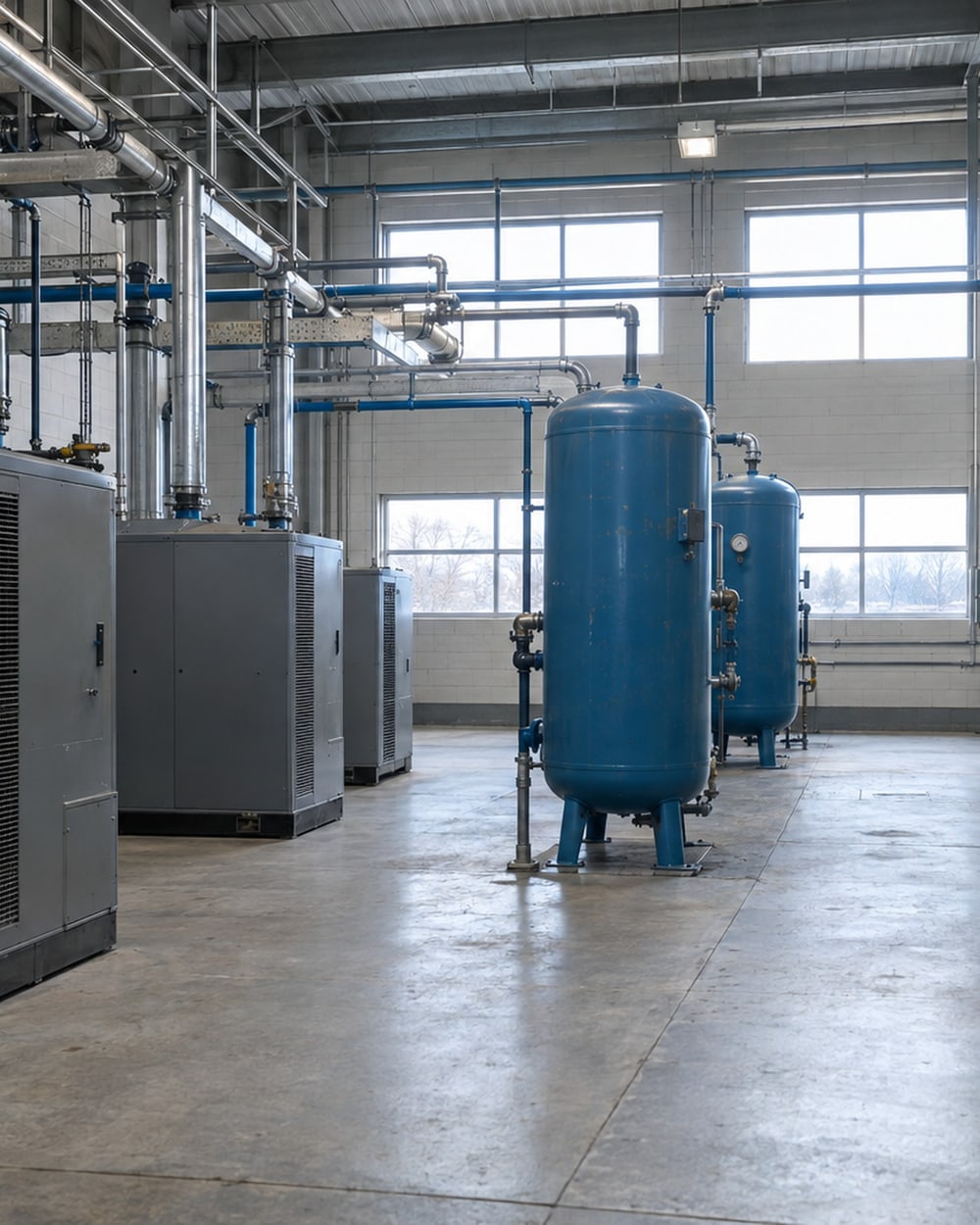
What we install
We install header pressure sensing and compressor current monitoring to follow pressure and runtime. Compatible meters and selected flow monitoring points add detail where your team needs to see air use separately.
Our wireless sensors send readings through 900 MHz radios, including Digi XBee, to a site gateway. The gateway connects those readings to your centralized dashboard.
We check instrument outputs, access and the wireless path during the site visit. Together, we agree the monitoring points, gateway connection and installation sequence around your operating schedule.
Follow the pressure after production
Watch pressure during production and then during an agreed idle check with the compressor off. A falling trace prompts the team to investigate the air loss.
An alert prompts a pressure check
- Production running
- Idle check: compressor off
- Pressure threshold
What your team gets
You get a live dashboard showing the agreed pressure, runtime and flow readings. A recorded baseline gives maintenance a reference for reviewing off-shift demand and checking the effect of leak repairs.
We configure alerts to phones and email around the conditions your team needs to know about. You choose the recipients, operating schedule and response to each alert.
Reports give your team a record to review alongside operating changes. Our team stays involved after installation to review the readings and adjust the monitoring as your needs change.
Case studies
Jeff Inkes, PDI Bulk’s general manager, reported annualized cost reductions from water and compressed air together. The stamping card’s 20–30% figure is a commonly cited leakage share in industrial compressed-air systems, not a measured saving from that project.
Compressed airWaterFood & Beverage ProcessingBulk Handling & Rail Logistics
More than $150,000 a year, taken out on the dashboard data
PDI Bulk
Metering PDI Bulk's water and compressed air showed where both were going, and within weeks the general manager had taken more than $150,000 a year out of operating costs on process adjustments alone.
$150,000per year
Compressed airManufacturing: Automotive, Plastics & RubberMetal Fabrication & Finishing
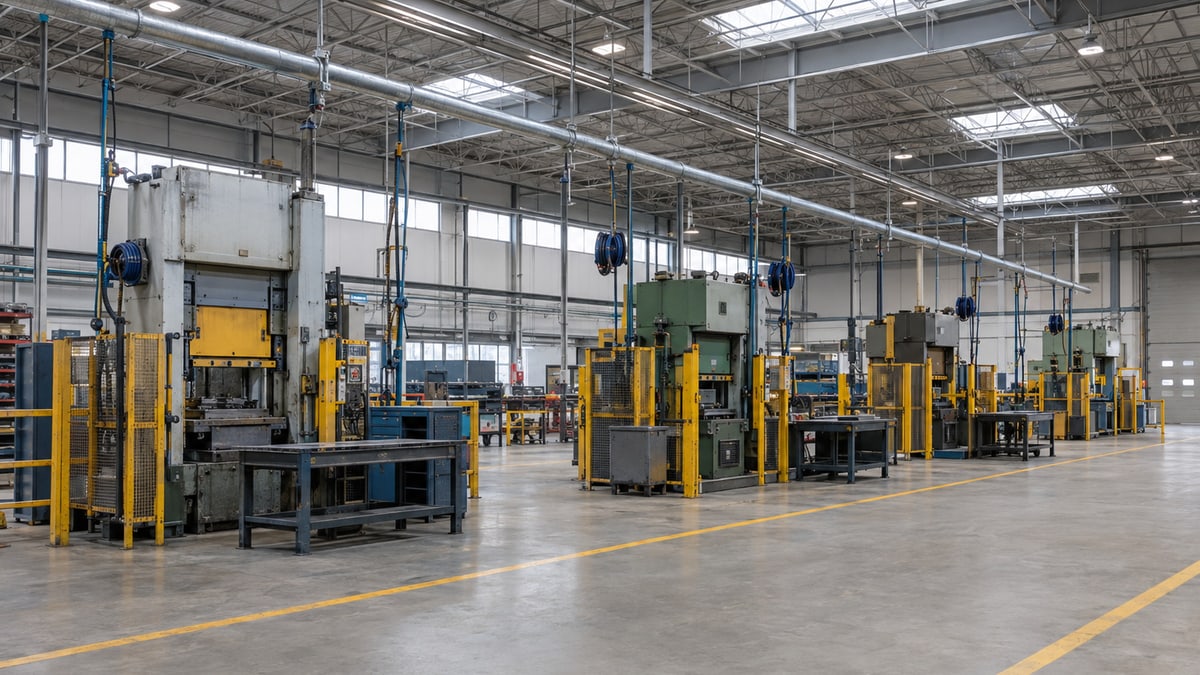
Compressed air leaks in a stamping operation
A Tier 2 automotive stamping factory
Permanent monitoring revealed compressed air continuing to flow into an otherwise idle building overnight.
20–30%of compressor output
Common questions
What do you monitor on a compressed-air system?
We monitor header pressure and compressor current to follow pressure and runtime. Flow monitoring can add a reading for selected areas of the system. We choose the points around the operating question your team needs to answer.
Can you connect existing instruments?
We connect existing instruments when their outputs suit the monitoring system. Pulse, 4-20 mA and Modbus are available connection paths, depending on the device. We confirm the output and configuration for each instrument.
How does monitoring support leak detection?
Monitoring shows continuing air use and compressor work during periods your team expects to be idle. Pressure, runtime and selected flow readings help narrow the investigation. The team checks the system and follows the readings after repairs.
How do you plan the installation?
We plan installation around the selected pressure, current and flow monitoring points. Access to the header and compressor determines the required work. Any idle pressure check is agreed with your operations team.
Who receives a low-pressure alert?
Your team selects the recipients and notification channels. We agree the pressure threshold and timing for the system, then configure the alert to reach the people responsible for checking it. The builder records those choices for review.
See what keeps the compressor running
Walk the facility with our team and show us where compressed air needs a clearer view. We will agree the measurements and connections to start with.
Book a site visitContact our team
or call 1-833-QUANTFY (1-833-782-6839)